Sunday, February 6, 2011

Cambodia

Nearly two months have passed since my trip to Vietnam and Cambodia and I still haven't written about the majority of it. Part of the problem is the sheer number of pictures I took makes the idea of sorting and processing them pretty intimidating. I have so many pictures I want to share and a million stories to tell, but I'll try to keep it simple.

Just getting from Saigon to Siem Reap, the main city outside of the Angkor temples, was a crazy adventure (if anyone happens to run into Tony from Me Mates youth hostel in Phnom Penh, kick him in the balls for me. I'll explain later.) We had the better part of three days to explore the temples, but in truth two days is probably enough. If you have a guide with you it might take longer, but I thought three days was a bit long.

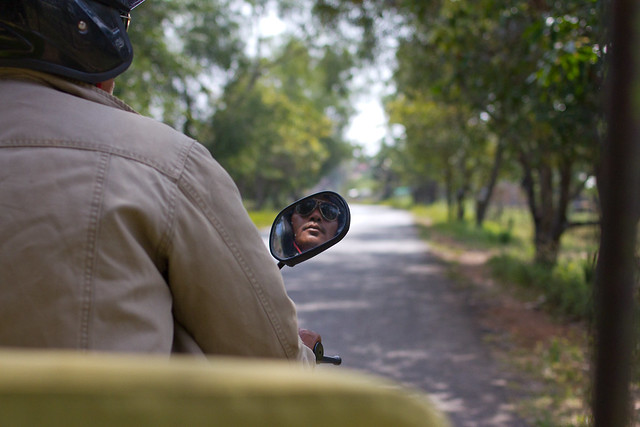
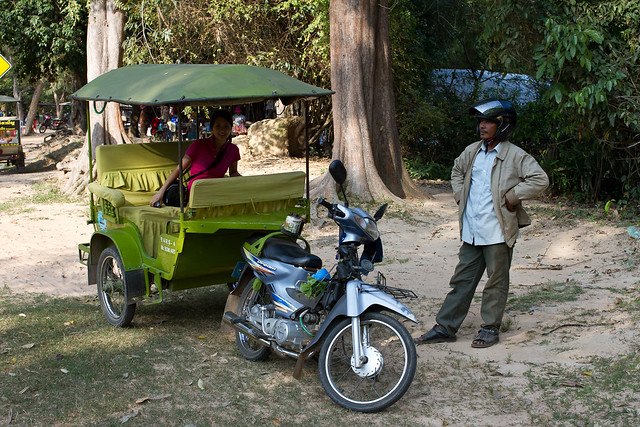
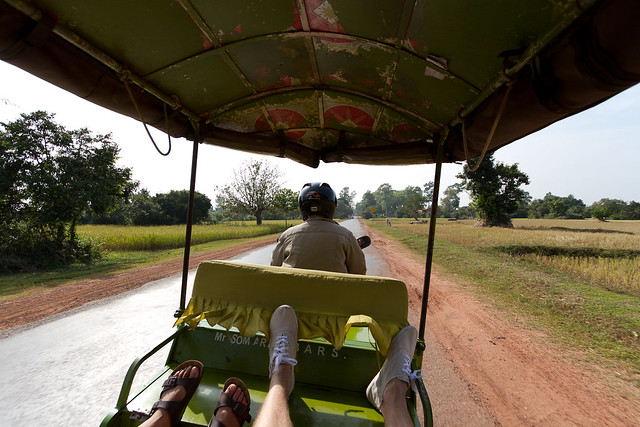
Step one for anyone checking out the temples is to hire a driver. We used a guy who hung out near our hotel named Sam Art and paid something like $20/day. He wasn't a guide or anything, just a guy with a tuk tuk. What's a tuk tuk you ask? Only the single most awesome means of transportation ever. Seriously, I freakin loved it. A tuk tuk is pretty much just a buggy strapped on to the back of a scooter, but you get the whole open air wind-in-your-face action as you cruise around. On a hot afternoon, it's awesome.
IMG_1840
IMG_1803
IMG_2196

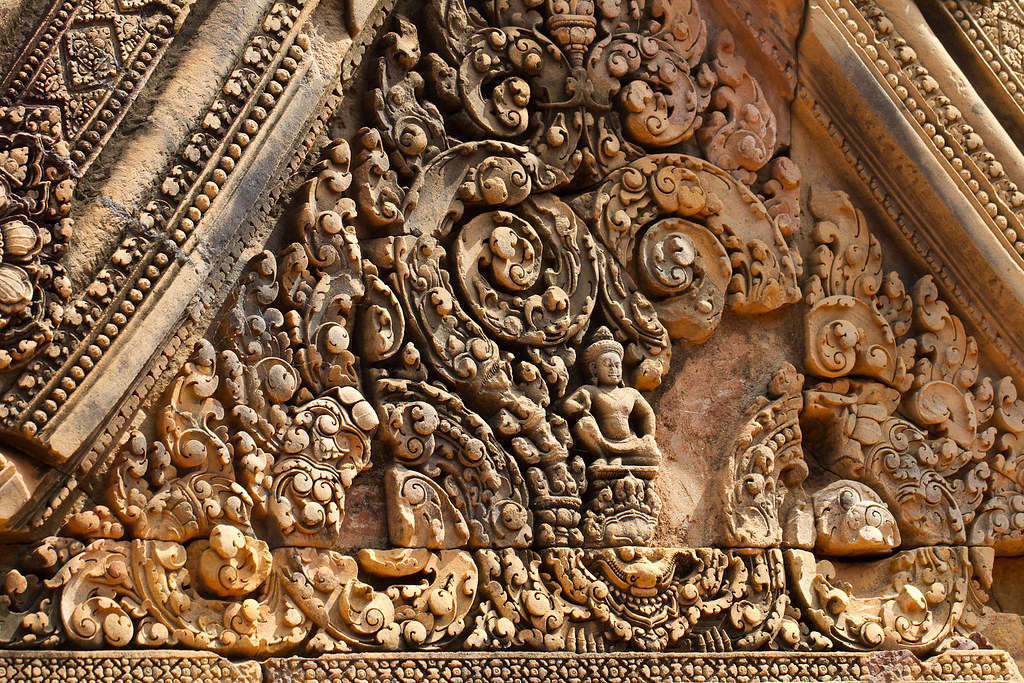
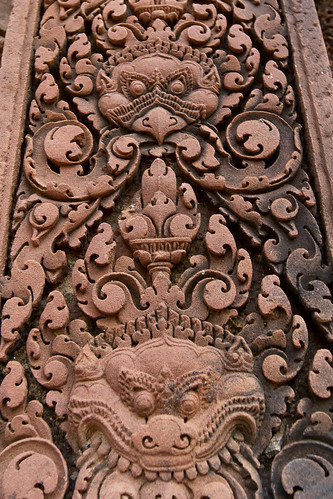
Banteay Srey is the farthest of the temples and is a bit of a haul to get to (not that you mind when you're riding in a tuk tuk!), but it's also the best preserved. I'm not sure if it's made of a harder type of stone, but the detail of the carvings are still in amazing condition.
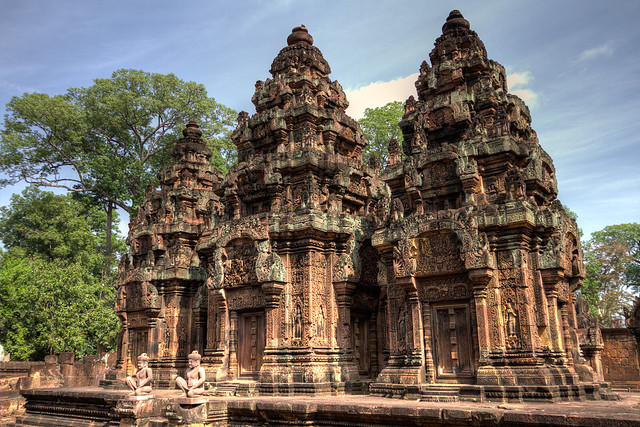
HDR - banray srei4
IMG_1777
IMG_1741

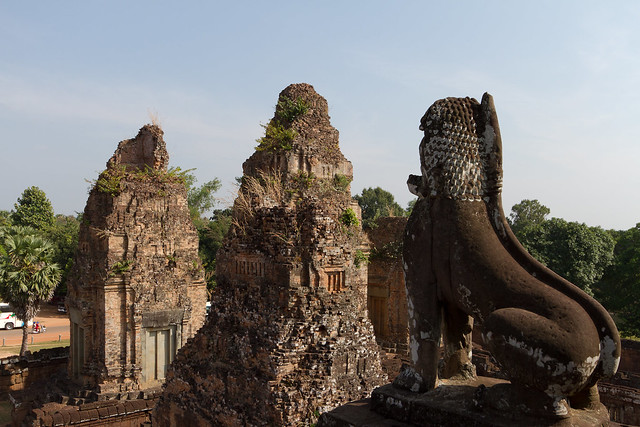
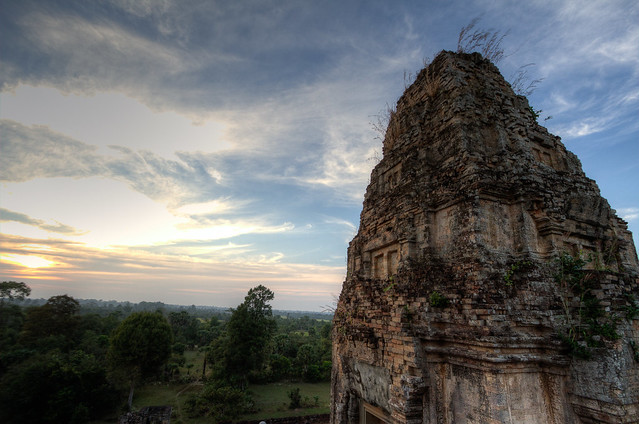
Pre Rup is not one of the better known temples, but it was my favorite. Tall enough to be impressive, battered enough to remind just how old these temples are.
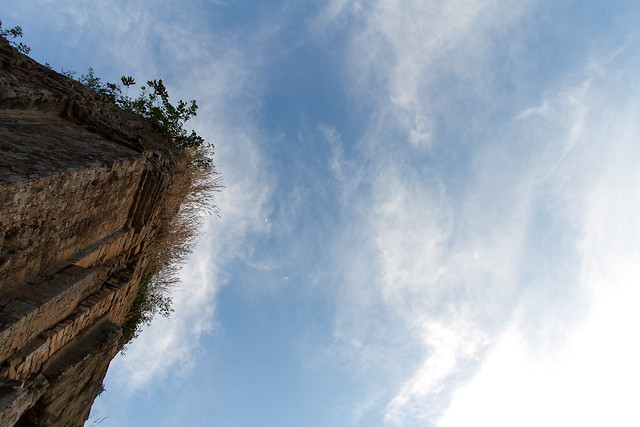
IMG_1919
IMG_1828
HDR - Angkor Sunset

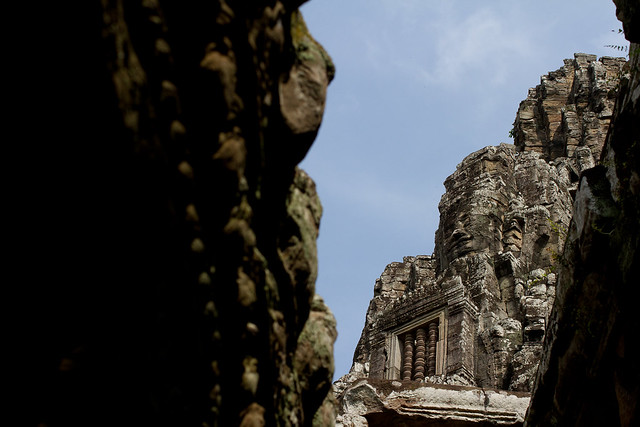
Ankor Thom is famous mostly for being huge. Personally, I wasn't that impressed, but maybe I had just seen too many temples at that point.
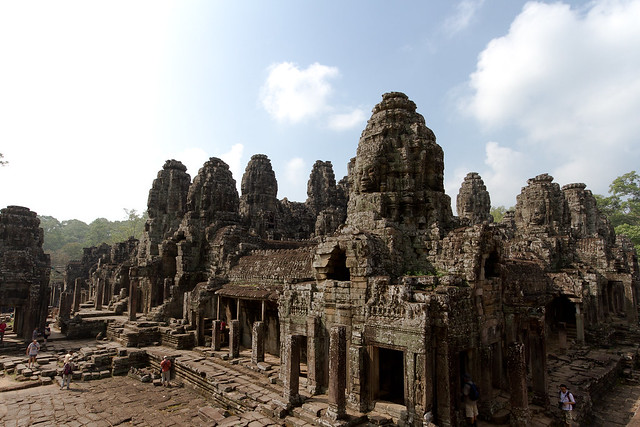
IMG_2135
IMG_2152

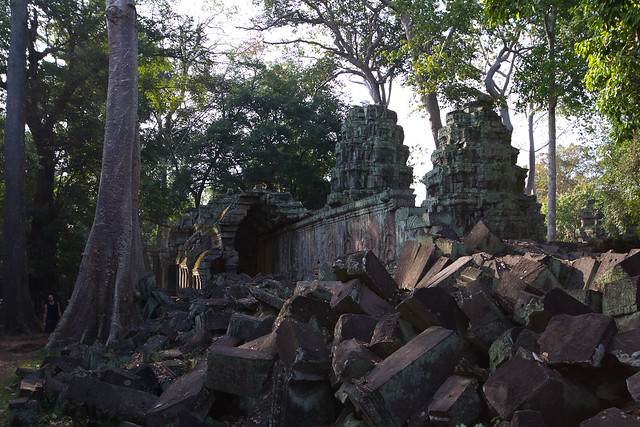
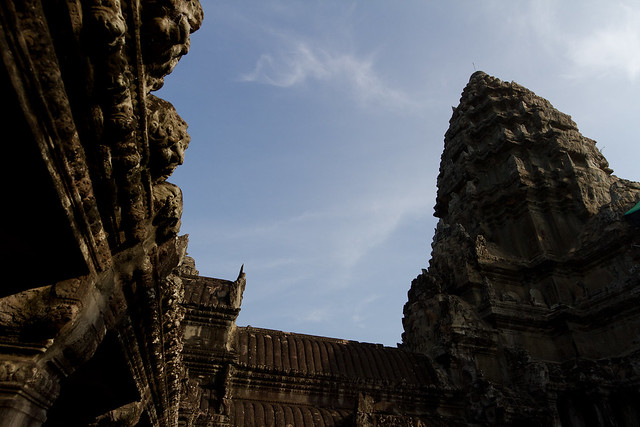
Ta Prohm is the temple that's known for having trees growing on top of it. Large parts of the structures have been supported with steel columns to keep them from collapsing and many parts are already in ruins. I would bet there won't be much left of the place ten years from now.
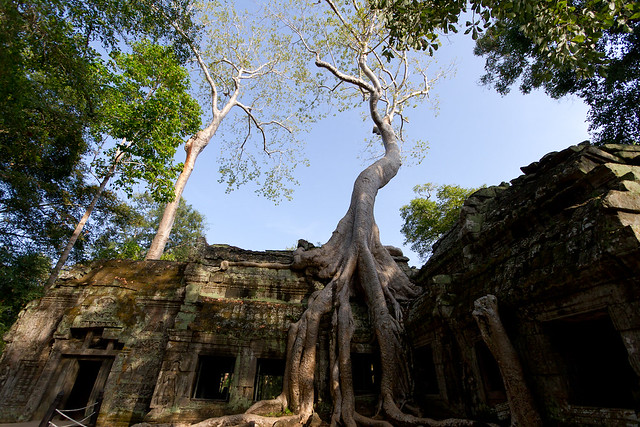
IMG_1853
IMG_1854

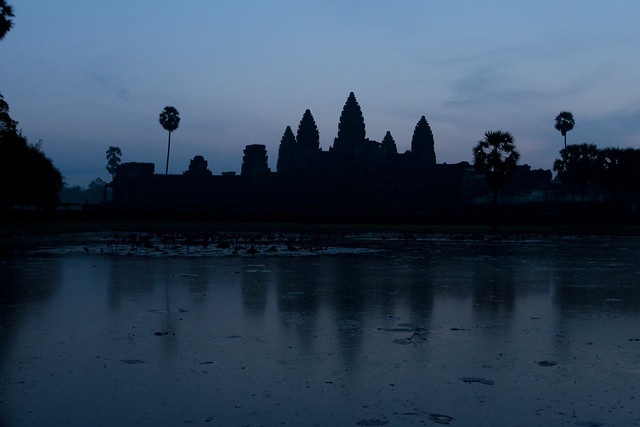
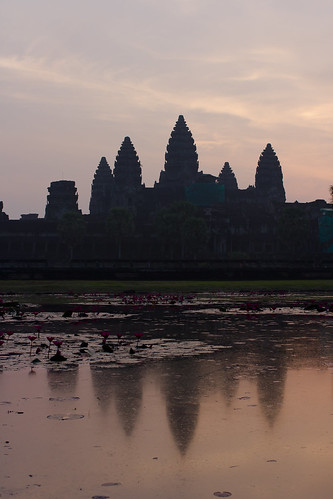
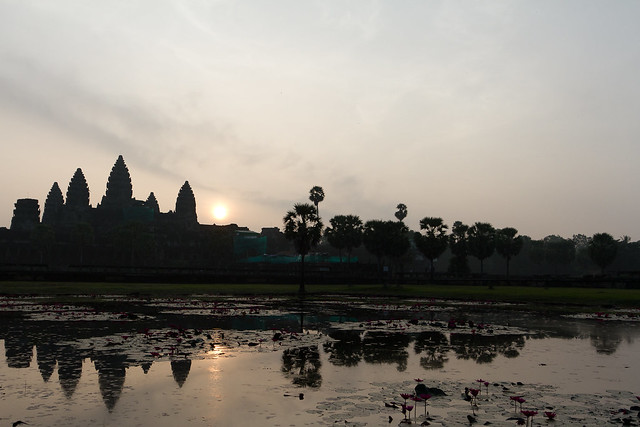
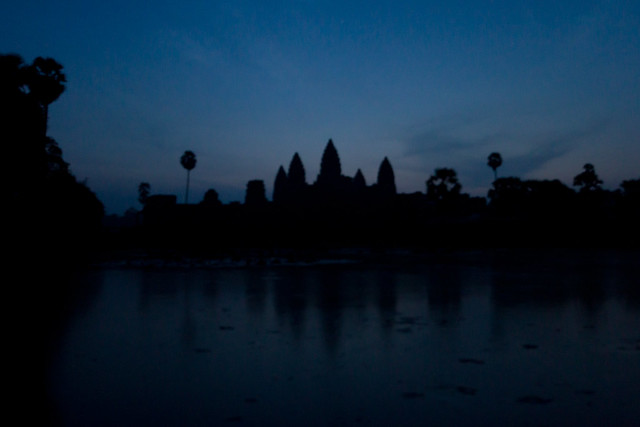
We went to see sunrise at Angkor Wat, which meant heading out at 5:00am, and managed to get one of the last spots in the front row. The actual sunrise itself wasn't very pretty, especially as it revealed all the ugly green netting where they are doing renovation work, but the view as it first started getting light out was great.
IMG_1969
IMG_1988
IMG_2018
IMG_2036
IMG_2081

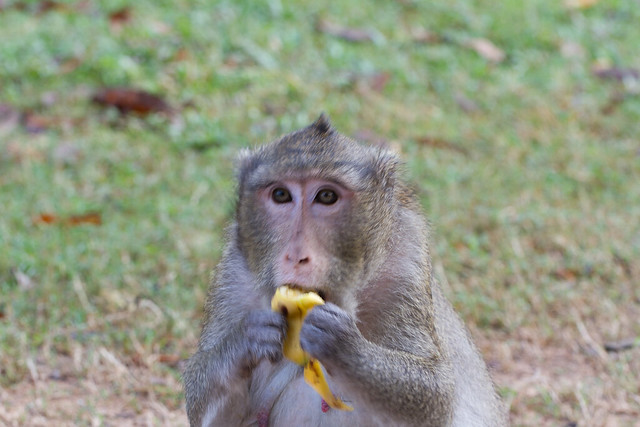
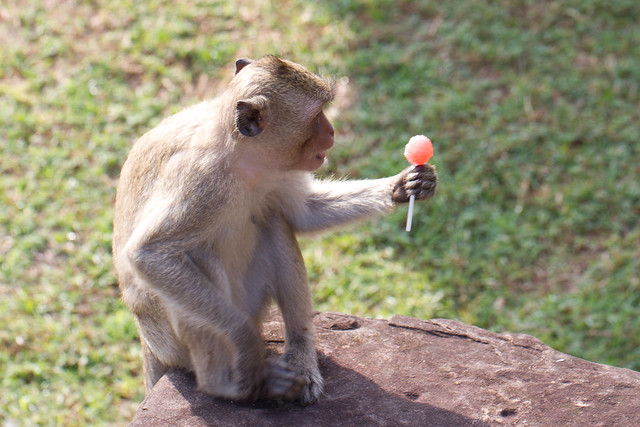
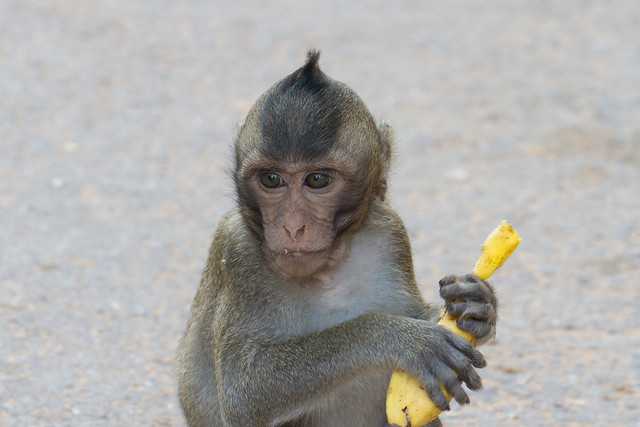
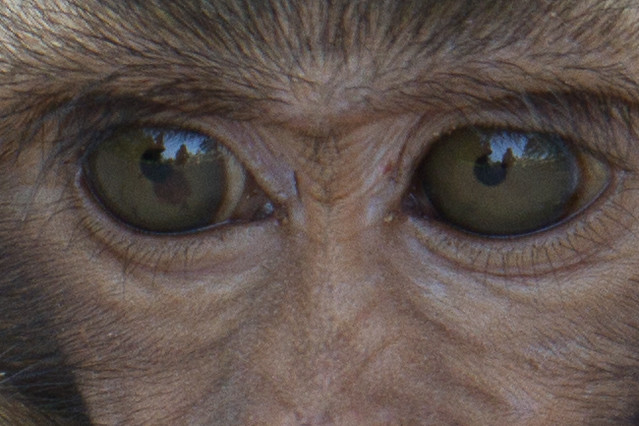
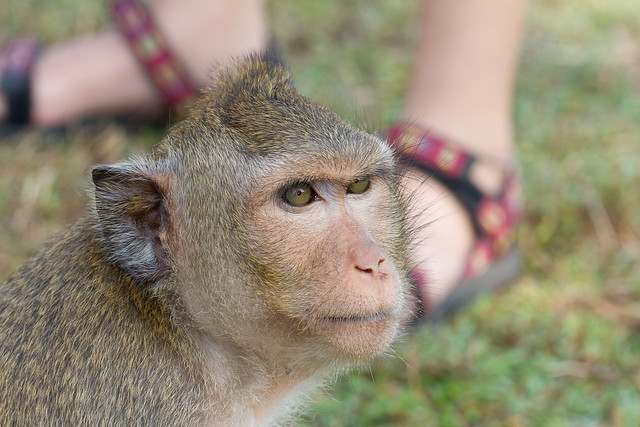
Around the back of Angkor Wat was a group of monkeys just hanging out and playing around. A few locals were selling bananas you could feed to them and one of them managed to get a lollipop from somewhere. The older monkeys could unpeel the bananas super fast, while the younger ones just kind of tore away at them. The last picture is a zoom-in of the picture before it and you can see the reflection of Angkor Wat in the monkey's eyes, which I thought is pretty cool.
IMG_2099
IMG_2112
IMG_2097
IMG_2114
IMG_2114zoom

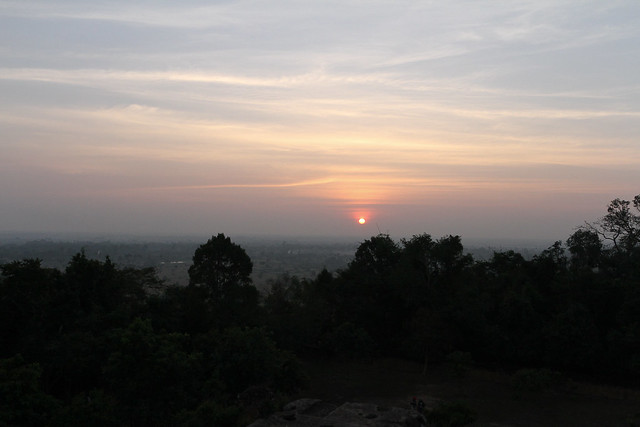
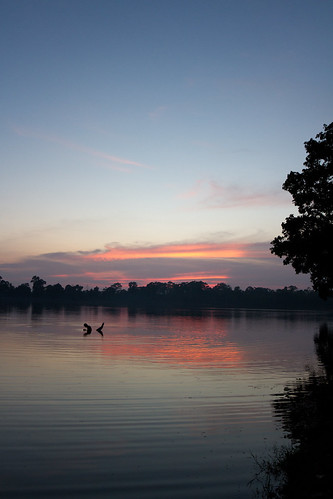
Naturally I took a bunch of sunset pictures as well. We didn't have the greatest of sunsets the days we were there and often the sky was best in the opposite direction after the sun was already down.
IMG_1953
IMG_1947
IMG_2219
IMG_2251
IMG_2250

While I can't speak for the rest of Cambodia, the Temples of Angkor were very cool and are definitely worth a stop for anyone making their way around SE Asia.

I've still got a few more destinations from our trip that need to be written about and hopefully I can have those up in the next few weeks.

Thursday, December 23, 2010

Saigon

At long last, I was finally able to take my much awaited summer vacation last week. That's right, summer vacation in the middle of December. I'd originally planned to take it in late September but, for a number of reasons (mostly involving anticipated work that never even actually materialized), it kept getting pushed back.

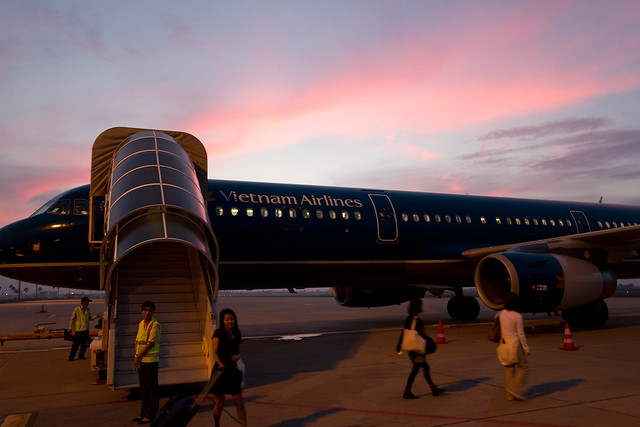
Yuki and I ended up spending the week traveling around Vietnam and Cambodia. I had originally planned to write all about everything we saw and did, but a week is a long time and I don't really feel like writing an epic post. The easiest way to do this is probably for me to split the trip up into chunks for each place we visited and just write a little bit about it. Also, I took over 700 pictures over the course of the week, so I'm only going to post the one's that I like best or are most illustrative. The rest will likely show up on flickr once I manage to work my way through them.

Right, so onto the story. We used Saigon as our central base of operations during the trip. I was told by a number of people before I went that "there's not much to do there, but the food is good". I was pretty skeptical about this at first, but now I have to say that it's not an entirely unfair assessment of the city.

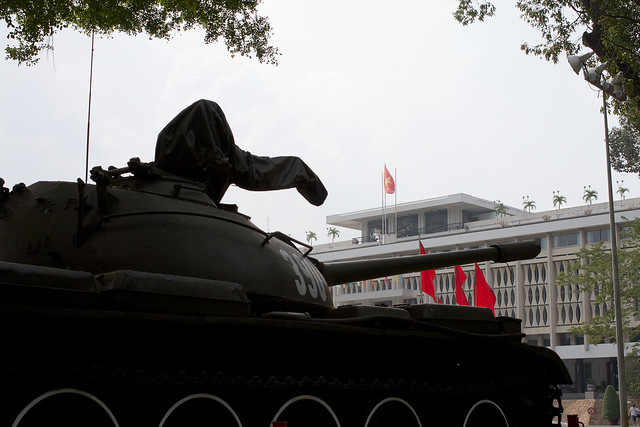
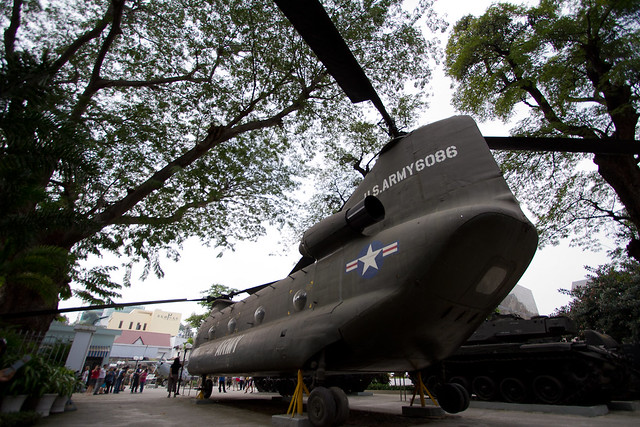
Having been born a generation too late to have witnessed the Vietnam War unfold, the most interesting place for me was the War Remnants Museum, which had some old equipment around the building and a huuuuuge photo gallery inside. War is ugly business to begin with and the Vietnam War was certainly no exception. We also visited the Reunification Palace (formerly know as the Presidential Palace), where the war came to an end when North Vietnamese tanks crashed through the gates and seized power from the South Vietnamese government, but beyond being a historically significant site it wasn't particularly interesting. The half-day side trip to the Cu Chi Tunnels was worthwhile, if only to get an idea of how terrifying jungle warfare must have been.


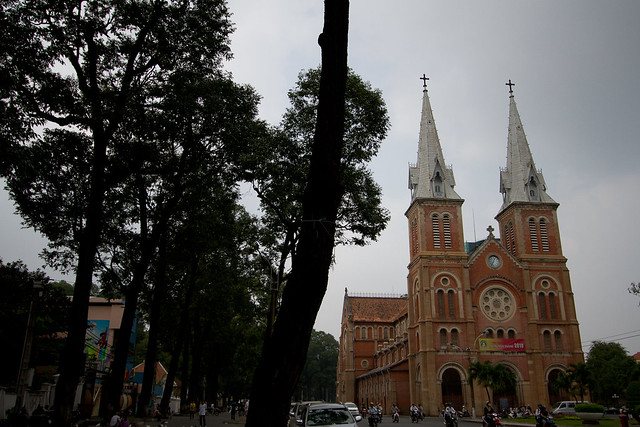
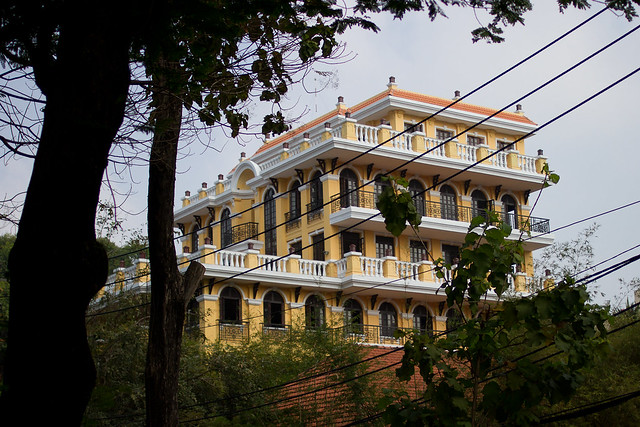
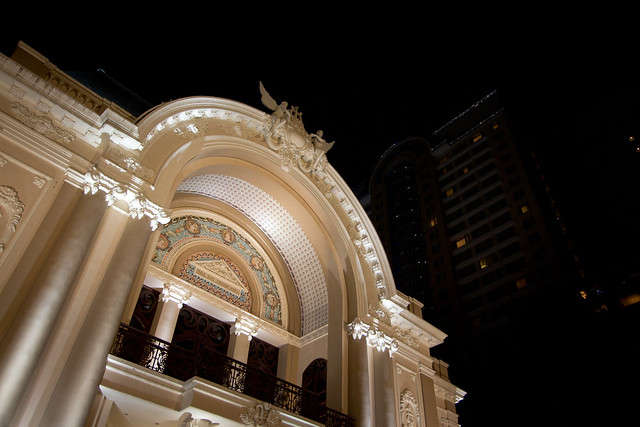
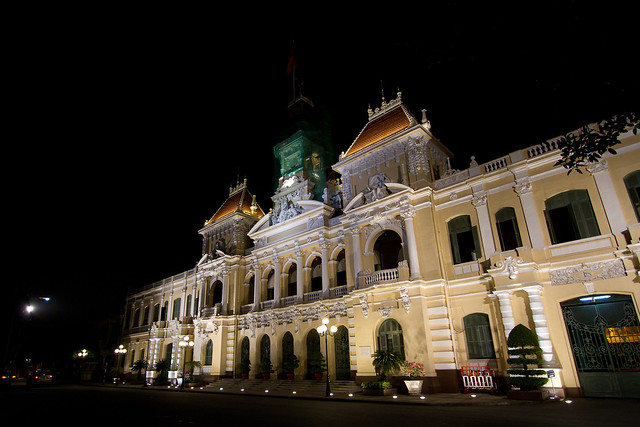
Aside from that, there is a good bit of beautiful architecture from the country's time as a French colony, but not much else that really stands out. We checked out most of the places listed in our guidebook but weren't terribly impressed.


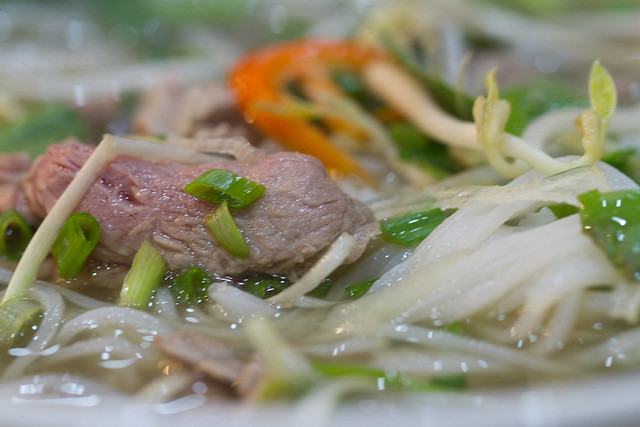
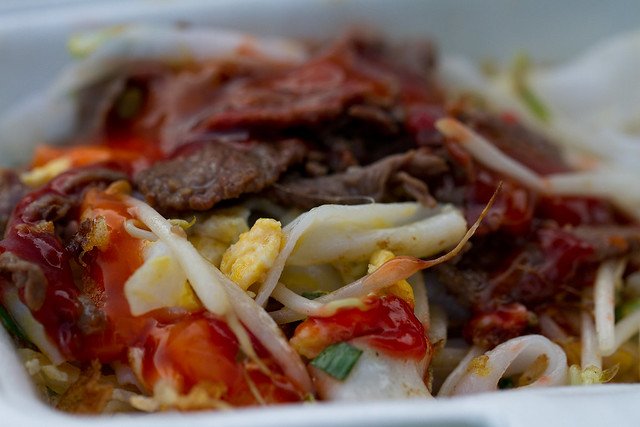
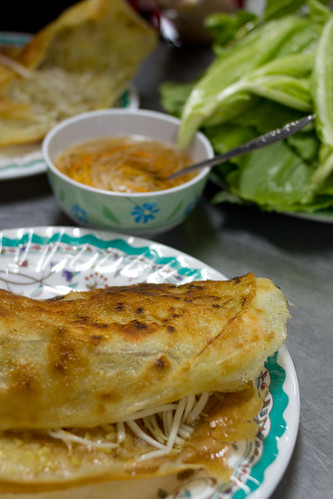
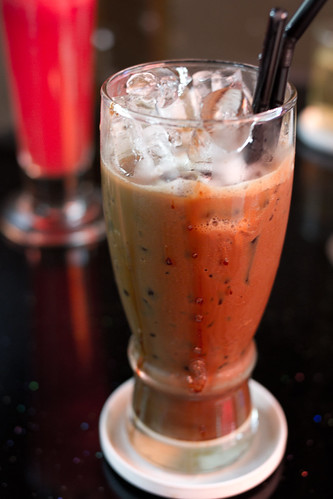
While I can't really rave about the sightseeing, I can't say enough about the food. From pho to banh xeo to street stalls, there is very little that we tried that wasn't delicious and dirt cheap. Most of our meals cost less than $5 for the two of us, including drinks. Though I found Vietnamese beer to be largely unenjoyable, we drank countless shakes made with fresh fruit and Vietnamese iced coffee will blow your mind. My only regret is not reading up more about Vietnamese food beforehand, as I think it would have made it much easier for us to try an even wider variety of food from street vendors.


IMG_2304
IMG_1673

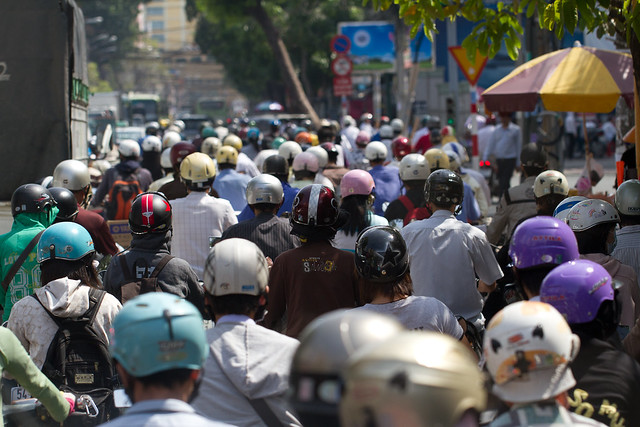
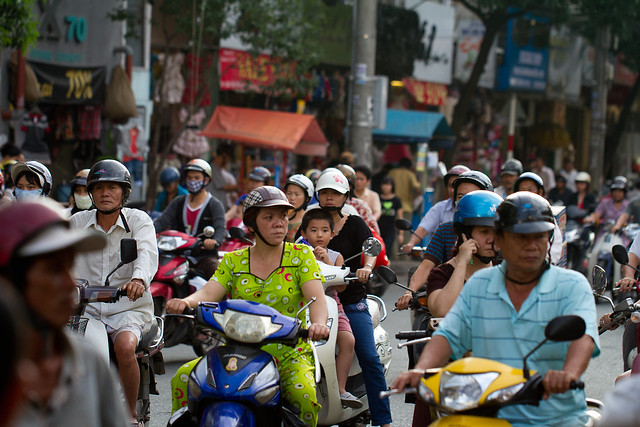
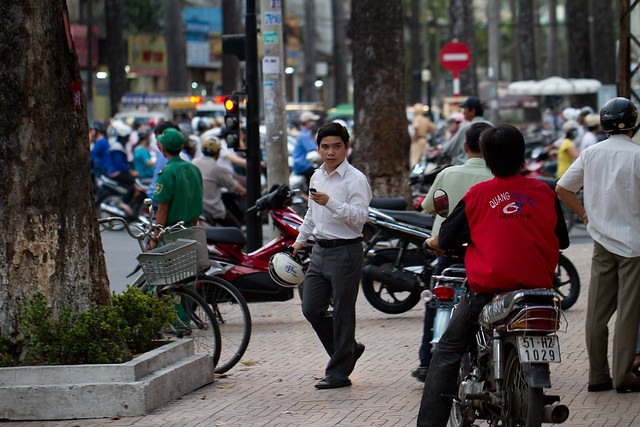
One thing that you can't avoid in Saigon is the absolute flood of motor bikes. Forget looking at traffic lights, crossing the street is like a real life game of Frogger. Think you'll play it safe and stick to the sidewalk? Wrongo-pongo! Impatient drivers at the back of the line will often just hop out of the street and zoom up to the front of the line. I'm sure there are traffic laws in Vietnam, it's just that nobody really pays any attention to them.


Saigon was decent enough but it probably wouldn't make it onto my "Favorite Destinations" list. It's worth a couple of days if you're doing the backpack-around-SE Asia thing, but I'm not convinced it alone is a destination. Fortunately for us, we had plenty more on our agenda...

Saturday, November 27, 2010

Getting Out of Town - Mt. Takao

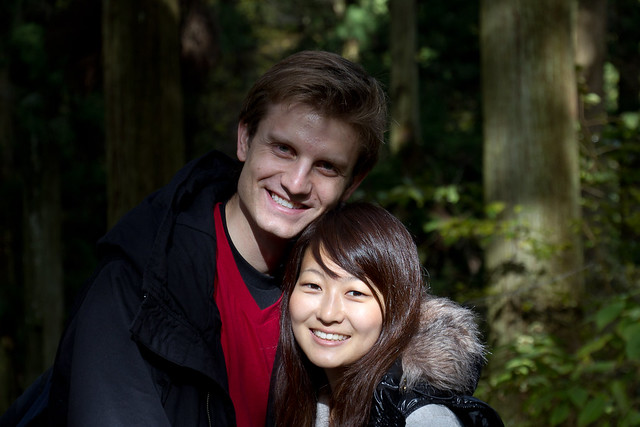
Last autumn, Mike, Yuki, and I went down to Kyoto on a long weekend to check out the beautiful fall colors, but the holiday was on a Tuesday instead of a Monday this year, denying us that extra bit of time to really get out of town. However, Mike set up plans for the Michigan kids to get together on that Tuesday and take a day trip to Mt. Takao, a relatively small mountain about an hour away from Tokyo that he had been to in past falls.


As the date approached, however, I wasn’t sure if I was going to be able to join. I had played soccer on the previous Sunday, the first real exercise I’d had in something like four months, and my body was an absolute wreck. I honestly can’t remember the time I was that sore and even just walking was painful, so the idea of hiking up a mountain didn’t sound too appealing, so I decided I’d see how I felt that morning and make a judgment call.

When I woke up, I felt only slightly better than I had the day before and at first I was planning on sitting it out. But the more I thought about it, the more I became convinced that I would regret not going. I usually work too late Monday through Friday to do anything outside of work and it seemed like a shame to waste a rare day off bumming around indoors, so I decided to suck it up and give it a go.

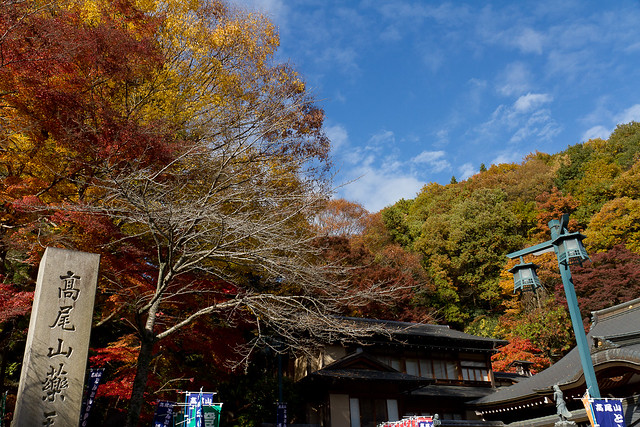
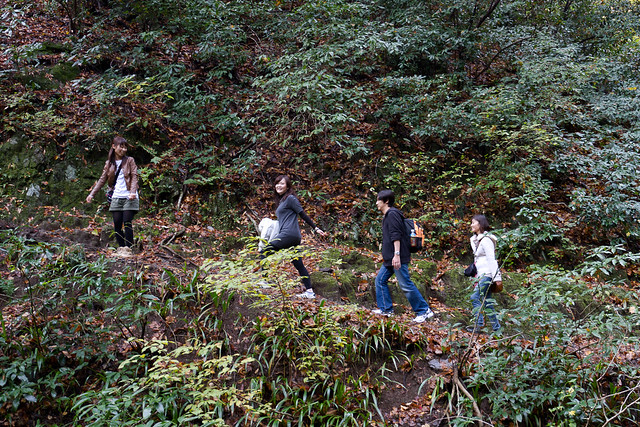
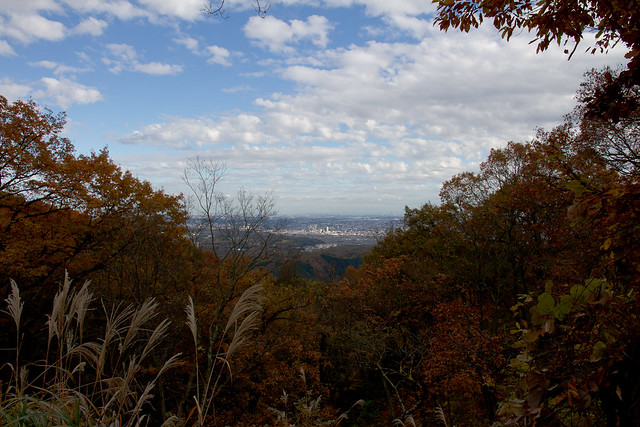
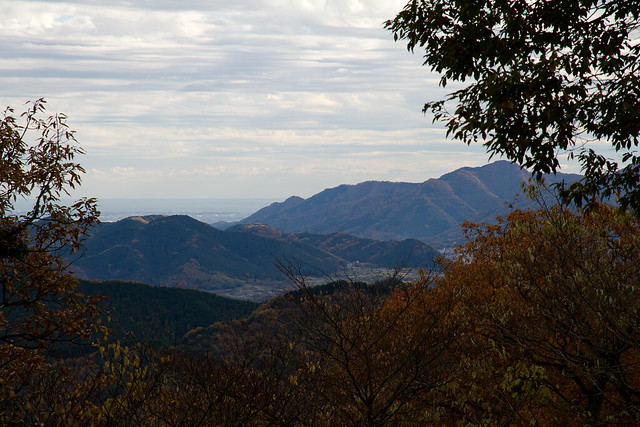
We all met up outside the train station at the base of the mountain. The morning drizzle had cleared up, leaving a cool but sunny late morning that was strongly reminiscent of Michigan falls. Most people take a cable car part way up, then hike the rest of the way to top, but we took a path less traveled that went all the way up. To be honest, it was a pretty gentle slope and not particularly strenuous until near the very end.

IMG_1416

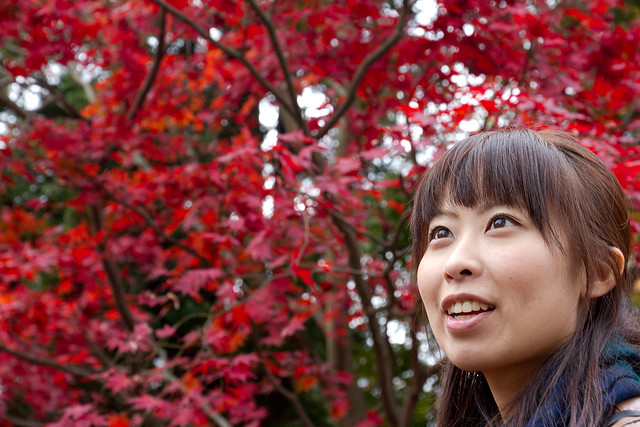
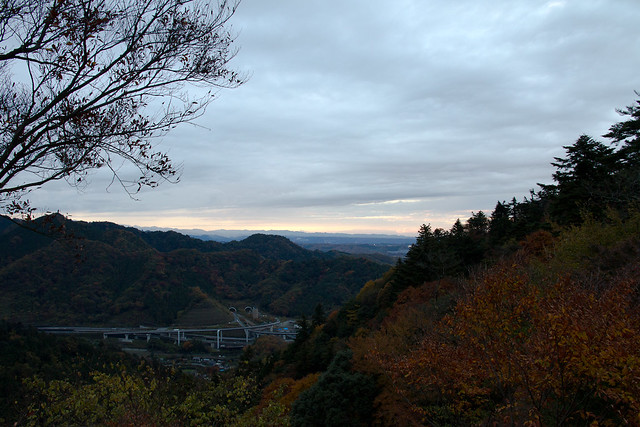
The fall colors weren’t the best, but it was nice just to be out of the city for a bit. The air in Tokyo never strikes me as particularly bad, but the fresh air at Mt. Takao was wonderfully refreshing. It just felt good to breath. The path we took was quiet and not at all crowded (a minor miracle anywhere near Tokyo on a holiday), allowing us to keep a slow pace, enjoying the nature and company.

IMG_1496IMG_1490
IMG_1473IMG_1476
IMG_1422
IMG_1433

It’s been getting colder around here lately and probably won’t be long before the idea of spending a day outdoors loses its appeal, so I’m glad we had a chance to get out. The scenery may not have held up to Kyoto’s last year, but it was a great day trip and it’s always a good time when the Michigan kids get together.

IMG_1410
IMG_1488
IMG_1458
IMG_1498

Thursday, November 25, 2010

Dive In

After we spent a weekend in Hachijojima last March, I wrote about how Yuki and I had a chance to try scuba diving and really enjoyed ourselves. We sat on the idea of getting proper diving certification for a while but never really did anything about it until Yuki happened to find a place with good reviews that was offering licensing courses for a fairly inexpensive price (more on that in a minute…). Figuring that it would be a fun option to have when we travel, we decided to check it out.

IMG_1269

The advertised price at the place was $150, but there were A LOT of strings attached. They really pushed people to buy their own gear (wetsuit, mask, snorkel, etc.), the idea being that owning your own gear would encourage you to stick with the hobby. Honestly, I think it was largely them taking advantage of a common tendency for Japanese people to have a hard time saying no when put on the spot (I had no such issues). If, however, you don’t shell out the $500+ for one of their gear packages, you’d have to pay something like $70 per dive session to rent it (x3 session = +$210). There was also a number of little administrative costs and knick-knicks that they make you buy which add up to another $70-80 or so. All-in-all, the total bill comes out to around $400, which is pretty much what it would cost at most other places in Tokyo anyway, so we figured we’d give it a shot. I wasn’t really thrilled about the way they kept trying to get us to buy things or sign up for stuff (if we’d said “yes” to all the add-ons, we probably would have blown through another $200-300), but they were excellent teachers and took good care of us throughout the process, so if you’ve got the will power to say no to all the selling, it’s not a bad shop to go with.

There are three components to getting your diving license:
(1) A paper test on basic diving technique and safety
(2) Diving practice session in a pool
(3) Diving practice session in open water

The test is easy: if you just read the little book they give you, there’s nothing difficult on it. I used a Japanese book and took the test itself in Japanese and still got something like 95%. To be honest, you could probably pass if you just read the first half of the book and use a little common sense during the test. The pool section is mostly focused on learning how to prepare your equipment and actually trying out the techniques you read about in the book. It’s pretty dry, but it makes everything easier to understand.

The open water diving is about learning to apply the basic techniques in a real life situation and involves four dives split over two days, with an option to split it over two weekends or stay overnight and do it all in one. We opted to stay over and make a weekend out if it.

hdr - morning train to diving

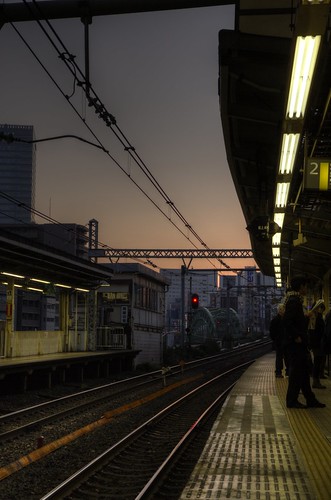
Most diving tours I’ve read about go out early in the morning (though I don’t really know why), and this was no exception. We were on train before 6am in order to make it to the dive shop by 7am, with an hour and a half car ride from their to the diving spot.

IMG_1274
IMG_1283

Being early November, we were worried that it was going to be pretty cold, but we lucked out and had great weather. After our first two dives Saturday morning, we spent the afternoon lounging around in an onsen up in the mountains, perfect after a morning in the cold Pacific waters. We bummed around in our hotel, a cozy little place literally overlooking the coast, before heading out for dinner.

IMG_1324
IMG_1316

The coastal area is full of windy roads that snake through the mountains, giving us a great view of the sunset. For dinner, we ate sashimi at a little family run place way up in the mountains. Top class fish at a price you would never see in Tokyo, it was a joy to eat.

IMG_1293
IMG_1309

The weather wasn’t quite as good the second day, but still decent enough. Two more dives and that was it: licensed scuba divers! Now we can go diving anywhere in the world, something we’ll be taking advantage of on our upcoming trip in a couple of weeks. Can’t wait!

IMG_1325
IMG_1321